What do three or four rotation buttons mean?
In the October 1 official Forever podcast, the class team describes the core rotation as the abilities you use from moment to moment, roughly within a sub-ten-second rhythm. Three or four is the preferred range for that core. When the host repeats a higher number, the developer corrects him. The number refers to recurring combat actions, rather than every ability on your bars.
The same discussion separates longer cooldowns from that core and uses Icy Veins as an example. Defensive tools, situational utility, consumables, and longer offensive cooldowns can sit alongside the regular damage loop. Consequently, a character with more than four useful keybinds is not evidence that Blizzard has abandoned the stated approach. A short rotation can still belong to a class with a large toolkit.
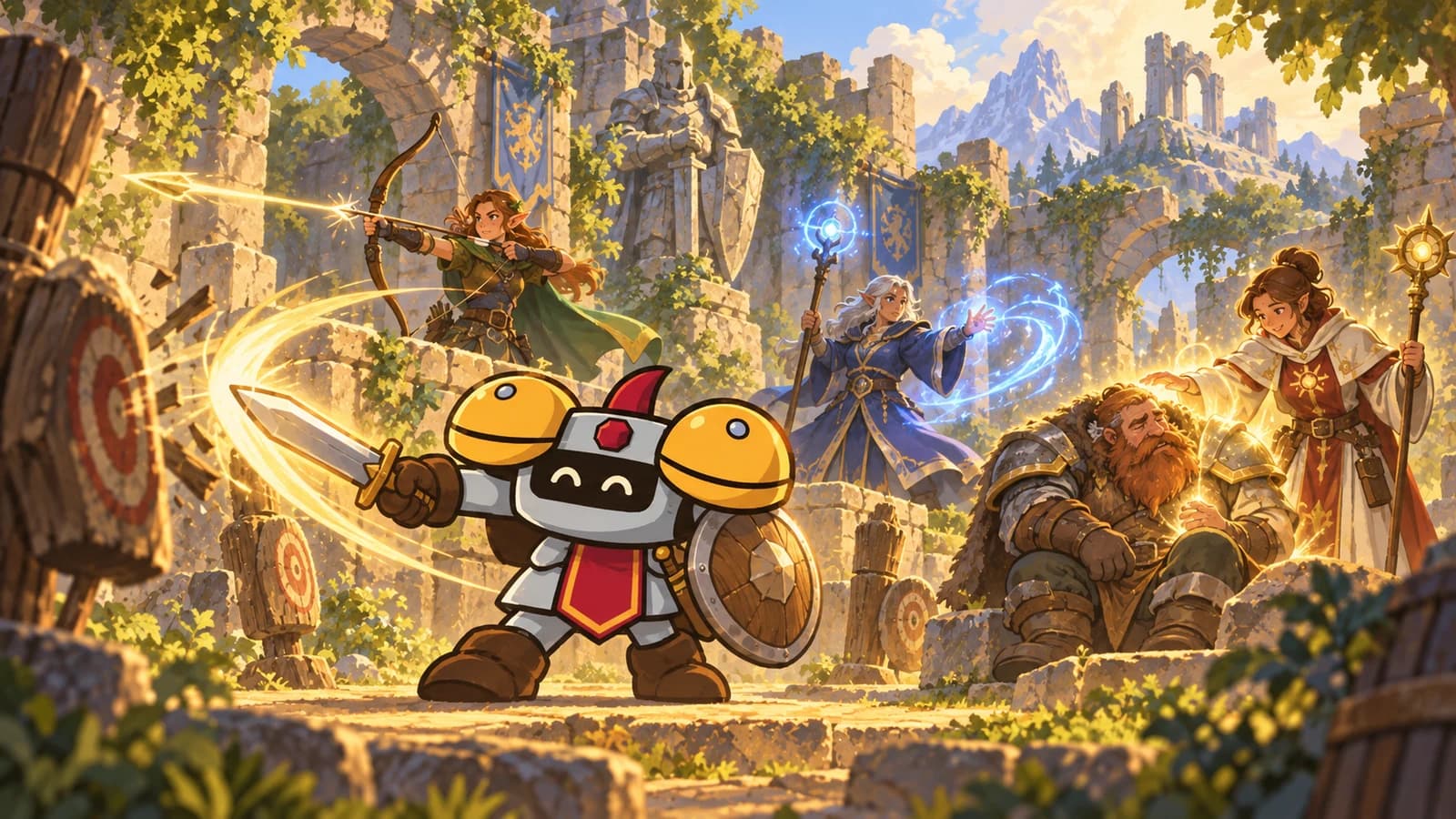
How is this different from Classic rotations?
The developers want to move away from the repetitive single-spell gameplay found in some Classic caster encounters. Their Mage example is repeatedly casting Frostbolt while overlooking a useful dispel. They are not saying that every Classic specialization has a one-button rotation, or that every familiar playstyle needs the same replacement. Class fantasy comes before a universal button-count formula.
Forever's direction is to introduce more decisions while retaining a relatively low-action rhythm. A fallback attack can still carry the rotation, with a proc or a short cooldown creating a reason to do something else. The goal does not guarantee a particular actions-per-minute figure. Cast times, resources, procs, talents, and the encounter all affect how often a player actually presses a button.
Utility is part of the design, not wasted time
The team explains that filling every global cooldown makes it difficult to add an interesting extra action: the player has no room left to take it. They want time to notice a party member in danger, a creature running away, or an opportunity for a stun or interrupt. Consuming an item or responding to the battlefield should fit around the damage loop.
For a returning Classic player, this means learning when to step outside the rotation as well as learning the rotation itself. Put the utility your class actually has within easy reach. A missed opportunity to stop a dangerous cast or help the group cannot be assessed from damage alone. The animation above illustrates that idea with an interrupt; it does not imply that every class gains one.
Class examples: procs, spells, and melee swings
The podcast explicitly says that white hits should remain important. The developers discuss how melee characters already produce considerable damage through weapon swings, and how adding more active attacks can increase their total power. Their aim is to preserve the significance of those swings alongside the new decisions, rather than judge a class solely by how busy its action bars feel.
That matters when comparing Forever with Classic: a quieter moment between abilities does not necessarily mean the character stopped contributing. Resources and timing still matter. Blizzard's Warrior deep dive also makes Tactical Mastery baseline, allowing some Rage to survive a stance change, and adds kill-triggered Victory Rush. Those tools illustrate a broader combat toolkit without defining an exact endgame rotation for every Warrior build.
The podcast uses Frost Mage's Fingers of Frost and Ice Lance as a simple example of a proc interrupting a fallback cast. It also acknowledges that some Mage specs currently have too little happening and says the team is examining that. The developers announce no specific new Mage rotation in this segment. The three-to-four target therefore should not be read as a finished description of the beta.
An official example from another class is Balance Druid's reworked Eclipse: casting Wrath changes the cast time of upcoming Starfire casts. That creates a relationship between spells instead of merely adding another unrelated button. Priest changes expand access to abilities such as Devouring Plague across races. Different classes can gain choices through different means; the podcast does not prescribe one identical sequence across them.
Why level 30 beta gameplay can look simpler
The October 1 patch raised the beta level cap to 30. Ordinary talents start at level 10, so that gives a character 21 class talent points. The 31-point capstone talents discussed in class previews remain beyond the reachable build. Later trained abilities can also be missing: Blizzard lists Shadow Word: Death at level 32, for example.
A level 30 demonstration is useful evidence for that level and build, but it cannot establish a completed level 60 rotation or a reliable ranking of every spec. The October 8 patch continues changing combat and spell tuning. When evaluating a guide, check its beta date, reachable talent points, and whether its proposed sequence relies on abilities that the tester could not yet use.
How to prepare your action bars for Forever
Start by identifying your recurring attacks, then give longer cooldowns and situational tools their own accessible bindings. Keep the reason for each ability clear: a proc response, a resource spender, a defensive, or a group utility action. This is a practical way to apply the developer explanation, not an official requirement to organize your bars in one particular layout.
Choose a class for the role and decisions you enjoy, and use its current guide for the actual talents and spell priority. The three-to-four aim can help explain Forever's pace; it cannot pick a best class for you or substitute for a tested build. Our class-specific articles and Forever-versus-Classic comparison cover those separate questions without turning this design discussion into a speculative tier list.
Still to come
Not yet settled by our sources or tested in game:
- Specific announced changes to Mage rotations after the podcast's acknowledgement that some specs need more moment-to-moment choices.
- Playable high-level rotations once the beta allows the relevant trained abilities and 31-point talents.
Sources
Beta notes are dated because Forever is still changing.
- Blizzard: Forever Podcast episode 2, 1 October 2026 — class design, 2:56Class fantasy, three or four core abilities, the sub-ten-second definition, and the distinction between core actions and longer cooldowns. Automatic captions were checked in context and paraphrased.
- Blizzard: Forever Podcast episode 2 — procs, utility, and auto-attacks, 7:03Fingers of Frost and Ice Lance as an example, space for battlefield reactions, and the importance of melee white hits.
- Blizzard: Forever Podcast episode 2 — unfinished Mage rotation work, 1:09:09The team acknowledges too few Mage buttons and discusses further work without announcing a specific change.
- Blizzard: Hunter and Druid class deep dive, 30 September 2026; checked 10 OctoberTalents begin at level 10, the familiar milestone structure, and Balance Druid's Eclipse interaction between Wrath and Starfire.
- Blizzard: Priest and Warrior class deep dive, 30 September 2026; checked 10 OctoberBaseline Tactical Mastery and Victory Rush; wider access to Devouring Plague; Shadow Word: Death trained at level 32.
- Blizzard: beta development notes, 1 October 2026; checked 10 OctoberThe beta level cap reached 30, leaving ordinary 31-point capstones unavailable.
- Blizzard: beta development notes, 8 October 2026; checked 10 OctoberCombat and spell tuning continue to evolve after the podcast.